Water Heater Repair in East Village, Manhattan
Reliable water heater repair East Village Manhattan services for pre-war residences, multi-unit co-ops, condominiums, and commercial retail spaces. When you face sudden water heater leaks, lukewarm showers, or burner ignition failures, accurate diagnosis prevents property damage and restores reliable hot water.
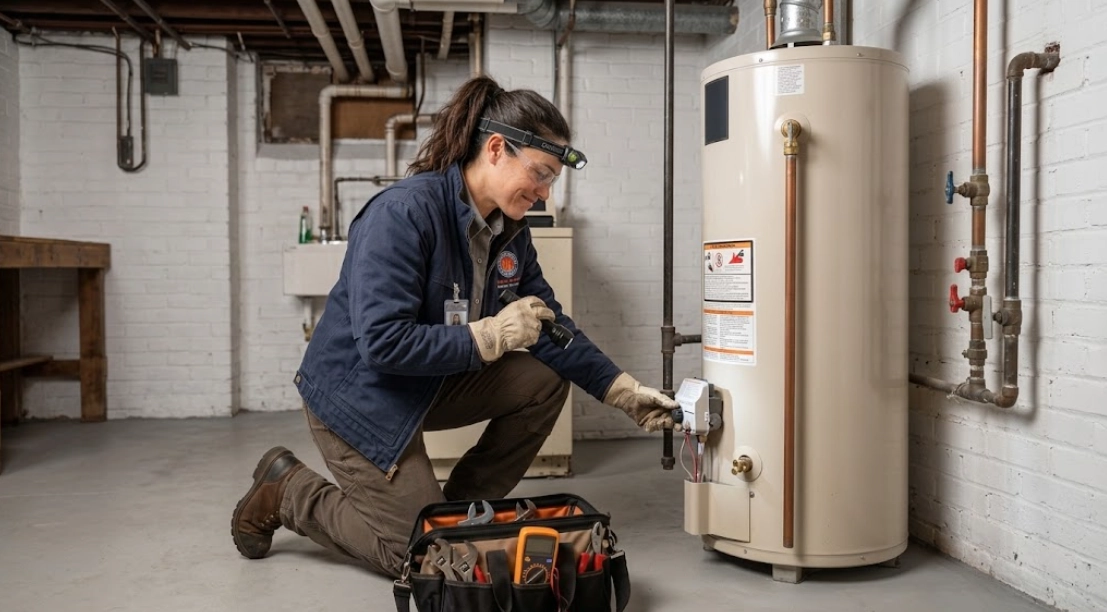
Symptoms Requiring Prompt Hot Water Heater Repair
Domestic hot water problems range from minor component degradation to severe structural tank failures. Recognizing warning signals early prevents catastrophic flooring damage.
Water Heater Leaking East Village Manhattan
Pools of water beneath the tank, moisture dripping from temperature and pressure relief (T&P) valves, or condensation along copper flex connections. Concealed base leakage can rot subfloors and seep into ceilings below. If you suspect an obscured leak nearby, check our primary hidden water leak detection East Village Manhattan service.
No Hot Water Repair East Village Manhattan
Completely cold water coming from taps. In gas models, this often stems from unlit pilot lights, thermocouple failures, or electronic spark control lockouts. In electric units, it points to tripped circuit breakers, faulty high-limit reset switches, or burned-out heating elements.
Discolored Water & Popping Sounds
Rusty, brownish hot water accompanied by kettle-like rumbling or popping sounds inside the tank. This indicates heavy calcium and magnesium sediment accumulation baking against the tank floor, trapping water pockets that violently vaporize under heat.
East Village Apartment Building Challenges & System Types
Historic housing stock around Avenue A, St. Marks Place, and 2nd Avenue features diverse water heating arrangements, each requiring specialized diagnostic procedures.
Gas Water Heater Repair East Village Manhattan
Atmospheric gas water heaters depend on natural chimney drafting and adequate ambient combustion air. In historic brownstones and converted tenements, tightly sealed mechanical closets can starve burners of oxygen, triggering thermal switch trip-outs or dangerous carbon monoxide backdrafting.
Our technicians inspect the thermocouple, gas control valve, pilot assembly, and exhaust venting pitch to ensure complete combustion compliance under New York City fuel gas codes. If gas odors are detected, review our emergency protocols on gas line repair and inspection.
Electric Water Heater Repair East Village Manhattan
Many modern East Village condominium apartments and loft renovations utilize 240V or 208V point-of-use electric storage or tankless units. Common failure modes include calcified lower immersion elements, defective thermostats, and corroded electrical junction boxes. We test line voltage, element resistance (ohms), and thermostat continuity to isolate electrical failures accurately.
Indirect Water Heaters & Space Constraints
Many multi-family buildings utilize indirect water heaters connected directly to a central hydronic boiler. In these setups, hot water generation relies on an internal heat exchanger coil. If the circulating pump or zone valve fails, hot water halts despite the boiler firing. For central system issues, explore our boiler repair East Village Manhattan capabilities.
Navigating tight Manhattan basement stairs, rooftop mechanical penthouses, and compact apartment utility closets requires careful planning. We ensure all shutoff valves, expansion tanks, and dielectric unions are systematically inspected before any repair is initiated.
Repair vs. Replacement: Making the Right Decision
We prioritize targeted component repairs whenever technically viable, safe, and cost-effective for East Village property owners.
When Repair Is Practical
Targeted part replacement is sensible when the steel storage tank remains structurally intact and the unit is under 8 to 10 years old:
- Faulty T&P Relief Valve: Replacing a dripping or calcified safety relief valve to restore pressure protection.
- Thermocouple or Pilot Assembly: Replacing oxidized sensors that refuse to hold the pilot flame steady.
- Electric Elements & Thermostats: Swapping failed upper or lower heating coils without draining the entire building system.
- Inlet/Outlet Dielectric Nipples: Correcting galvanic corrosion at external copper-to-steel pipe transitions.
When Replacement Is Required
Complete unit replacement becomes necessary when structural safety or fundamental integrity is compromised:
- Internal Tank Rupture: Water weeping through the outer jacket insulation or steel seams indicates permanent tank failure.
- Severe Bottom Corrosion: Extensive oxidation on older units risking sudden catastrophic basement or apartment flooding.
- Frequent Recurring Failures: Aging units exceeding 10–12 years requiring repeated service calls and costly parts.
- Outdated Non-Compliant Venting: Historic chimneys failing current NYC DOB chimney drafting requirements.
Need professional diagnostics for your apartment or building water heater?
Call (315) 202-8009 for ServiceDiagnostic Process & Project Cost Factors
Every domestic hot water project requires rigorous troubleshooting before work begins. We evaluate all physical and mechanical factors.
What We Inspect During Diagnosis
- Supply Pressure & Thermal Expansion: Testing municipal incoming water pressure and verifying the expansion tank bladder integrity.
- Safety Relief Operation: Checking the 150 PSI / 210°F temperature and pressure relief valve discharge line for obstructions.
- Fuel Delivery & Ignition Circuits: Measuring gas manifold pressure, testing millivolt output from thermopiles, or measuring electric element amperage.
- Corrosion & Leak Pathways: Differentiating internal tank corrosion from sweating fittings, overhead leaks, or failing pipe leak repair issues.
Factors That Influence Service Scope
Water heater repair costs and timelines vary based on real-world mechanical variables rather than flat-rate guesswork:
- Fuel Type & Complexity: Gas atmospheric units, power-vent systems, commercial high-recovery heaters, and electric multi-element systems involve distinct component costs.
- Accessibility & Placement: Confined basement crawlspaces, suspended ceiling installations, and tight hallway closets require specialized maneuvering.
- Building Coordination: Co-op and condo requirements for water riser shutoffs, superintendent notifications, and insurance documentation.
- Plumbing Code Upgrades: Adding required shutoff valves, sediment traps (drip legs), vacuum relief valves, or code-compliant discharge piping.
Frequently Asked Questions About Water Heater Repair
Direct answers to frequent hot water concerns from East Village property owners.
What should I do if my water heater is actively leaking onto the floor?
First, ensure your personal safety and avoid stepping in standing water near electrical connections. If safe and accessible, shut off the cold water supply valve located on top of the heater. For electric units, turn off the breaker at the electrical panel; for gas units, turn the control dial to VACATION or OFF. Then call our dispatch at (315) 202-8009 and alert building management if water might migrate to neighboring apartments below.
Why is my hot water running out much faster than usual?
Rapid loss of hot water is typically caused by severe mineral sediment buildup insulating the bottom of the tank, a broken dip tube allowing incoming cold water to mix directly with outgoing hot water, or a burned-out upper or lower heating element in an electric water heater.
Can a leaking water heater tank be welded or patched?
No. When an internal glass-lined storage tank corrodes through and begins leaking through the outer jacket or bottom seam, it cannot be safely or reliably patched due to constant municipal water pressure (40 to 60+ PSI). Tank rupture leaks necessitate replacing the unit, whereas external valve, fitting, or heating element gasket leaks can often be repaired.
How do venting and gas clearances affect water heater repairs in East Village apartments?
East Village tenement conversions and pre-war buildings have strict NYC Department of Buildings (DOB) and national fuel gas code standards governing chimney flue draft, combustion air clearances, and metal exhaust pitch. Any service on gas-fired water heaters must verify that carbon monoxide exhaust vents safely outdoors without backdrafting.
Explore Related Plumbing & Heating Services
We provide comprehensive plumbing support across Manhattan. Visit our leak detection East Village Manhattan homepage, examine our boiler repair options, read about whole-building repiping services, or review our neighborhood coverage on the Service Areas page.