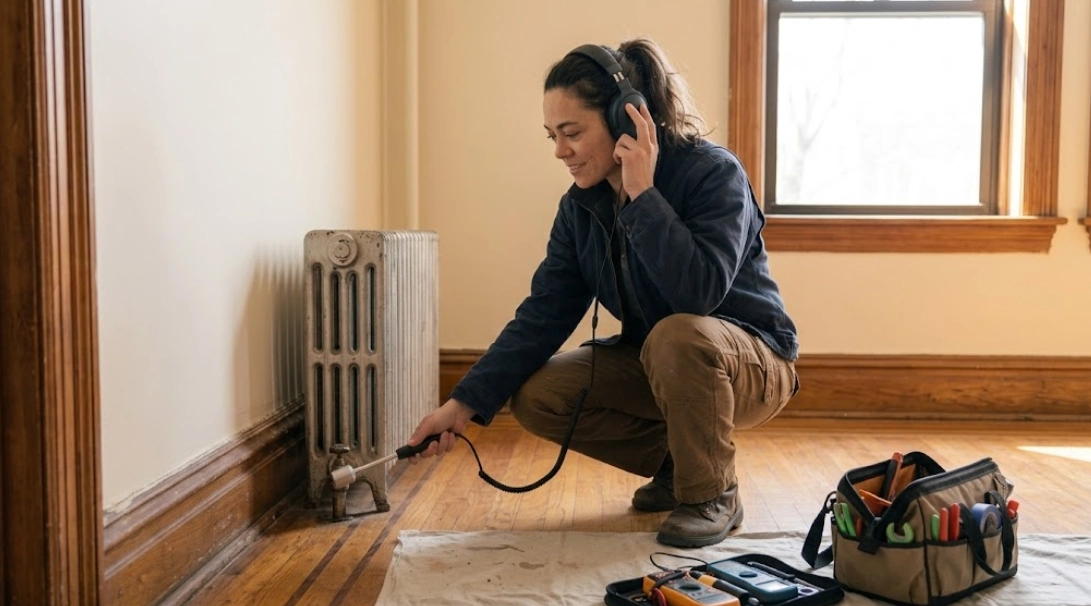
Plumbing architecture across the East Village is defined by historic five- and six-story tenement buildings, classic row houses along St. Marks Place, and converted apartment buildings flanking Avenue A and Tompkins Square Park. Many of these properties feature dense plumbing configurations where original galvanized steel branch lines, aging copper risers, and heavy cast-iron waste stacks share narrow masonry shafts. When water escapes a compromised joint or pinhole fissure, the point of emergence rarely corresponds to the actual pipe break.
Water follows gravity, capillary action, and the slope of horizontal subfloor timbers before dripping through an ornamental plaster ceiling or soaking into baseboard moldings. In multi-unit buildings, a water leak from upstairs apartment East Village Manhattan can migrate along a shared structural beam and manifest thirty feet horizontally from the source. Pinpointing the origin requires specialized diagnostic instrumentation and an understanding of historic New York City construction techniques rather than hasty drywall demolition.
When property owners or co-op shareholders search for leak detection East Village Manhattan, our focus is delivering clear answers before any building finishes are disturbed. We establish whether the moisture is pressurized potable water, intermittent drainage discharge, steam radiator condensate, or exterior masonry penetration.